Bead size + wrist fit · 5 minute read
Same wrist. Bigger beads. A different count.
We made six simple strands to see what changes when you choose a different bead size.
You count the beads in a bracelet you like, choose the same number, and expect it to fit. Then you change the bead size. Suddenly the count is wrong.
For a 15.5 cm wrist, our Studio produced 23 beads at 8 mm and 19 beads at 10 mm. At 17 cm, the counts became 25 and 21. The bead diameter and the space inside the bracelet are different measurements. Both matter.
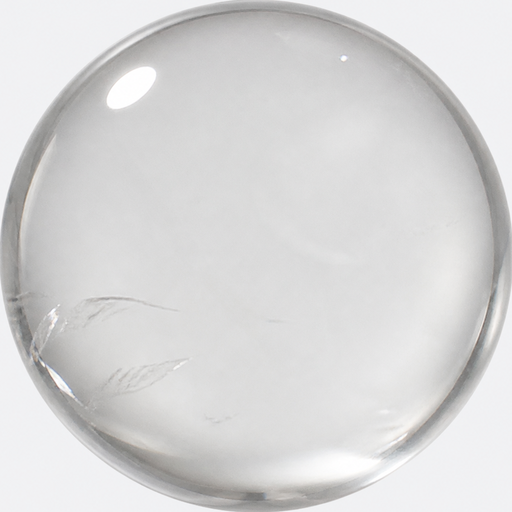
The same clear quartz preview shown at an 8:10 diameter ratio. This illustrates relative bead size; it is not life-size on your screen or an on-wrist photograph.
How many 8 mm or 10 mm beads do I need?
We completed six clear quartz strands in the bead-by-bead Studio. Keeping the material the same made it easier to see what wrist size and bead diameter changed.
| Wrist measurement | 8 mm beads | 10 mm beads |
|---|---|---|
| 15.5 cm | 23 | 19 |
| 17 cm | 25 | 21 |
| 18.5 cm | 27 | 22 |
These are the counts for complete designs in the current Studio. They are a useful starting point for our tool, not a universal sizing chart for every elastic, bead shape or bracelet maker. The finished fit still depends on the actual beads, construction and how much movement you prefer.
Why not divide wrist size by bead size?
A 17 cm wrist is 170 mm around. Dividing 170 by 8 gives a little over 21 beads—but that treats the beads as if their centres sit directly against your skin.
Round beads have thickness. The string runs through their centres, around a larger loop than the space your wrist occupies inside. The Studio accounts for bead thickness and a small fit allowance before rounding to a whole bead. That is why this 17 cm example uses 25 of the 8 mm beads.
Enter your actual wrist measurement in the wrist field. Adding your own allowance there would make the tool start from a larger wrist than the one you measured.
What changes when you choose 10 mm?
A 10 mm bead is 25% wider than an 8 mm bead. It makes each stone more prominent, even though the design uses fewer stones. At the same 17 cm wrist setting, our completed strand went from 25 beads to 21.
That also changes the room available for an arrangement. A design with several accent groups may need a new rhythm when four positions disappear. If you change bead size after building a mixed strand, check the sequence again and finish any empty positions before relying on the quote.
Choose 8 mm if you prefer the smaller bead scale; consider 10 mm if you want each bead to be more noticeable. Either can carry a detailed design. The number of beads is a fit and composition choice, not a measure of how much meaning a bracelet has.
Try it with your own wrist.
- Measure where you will wear it. Use a flexible tape close to the skin without pulling tight. If you only have paper or non-stretch string, mark the overlap and measure it flat. The full wrist measurement guide explains which size labels to compare.
- Open the bead-by-bead Studio. Set the wrist measurement and choose a bead size.
- Complete a simple strand. We used “Finish with clear quartz” for the comparison. You can choose another available material.
- Wait for the completed count and quote. Change one setting, then compare. If the new size leaves spaces, fill them before judging the finished design or price.
All six clear quartz examples returned a verified $89 quote during this check. That is a dated example price, not a promise that every material, combination or future design costs the same. Review the current quote for the bracelet you actually make.
Buying a finished bracelet instead?
Use that product’s own wrist or inner-circumference information. “8 mm” on a listing tells you the size of a bead; it does not tell you the size of the finished loop.
Our amethyst guide compares smaller and larger beads, while the silver sheen obsidian guide explains its 10 mm strand. Where a finished measurement is not recorded, ask about fit before ordering. Copying a Studio bead count will not establish the dimensions of a separate product.